

Case Study
Denials Prevention Manager
Riverside Moves from Denial Follow-Up to Earlier Intervention with FinThrive Denials Prevention Manager
Challenge
Before implementing Denials Prevention Manager, it could take Riverside Health System (Riverside) weeks to uncover a claim issue following a payer denial. To move from reactive follow-up to earlier intervention, the team needed better insight into payer behavior. They needed to understand where the issue originated, route them to the right team and act before claims reached the payer. Riverside sought a solution that could:
-
Reduce the risk of delayed payments and costly follow-up by gaining visibility into potential denial issues early enough to act before submission
-
Enable timely corrective action by clarifying what needs attention and which team is responsible
-
Protect revenue and limit leakage through a repeatable prevention process that reduces reliance on downstream rework
Solution Highlights
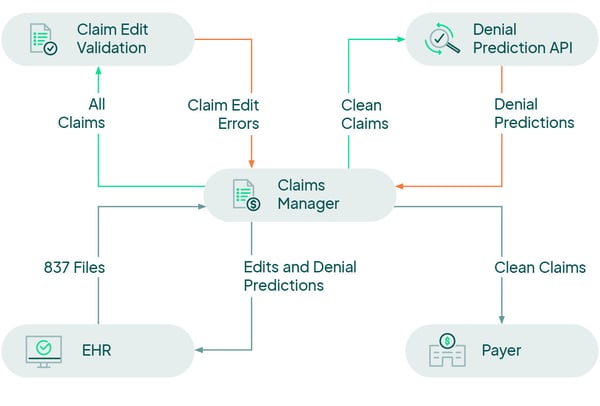
Denials Prevention Manager, powered by FinThrive Fusion®, helps Riverside take a proactive approach to denial prevention by surfacing potential issues during pre-submission validation. Its predictions and line-level insights helped Riverside:
-
Identify claims requiring attention
-
Flag potential denial risk before the claim reaches the payer
-
Integrate denial predictions into the existing EHR claim editing workflow
-
Provide line-level context to support focused review and correction
-
Compare workflow adoption with EOB outcomes over time
Executive Summary
Customer
Riverside Health System
Solution
Denials Prevention Manager
Type
Non-profit academic health system
Location
Southeastern Virginia
EHR
Epic
Partnership
Since 2015
Riverside needed a more proactive way to identify potential denial issues early enough to act before claim submission. Success meant creating a repeatable denial prevention process that reduces downstream rework and protects revenue.
Partnership Results
77%
Lower denied-dollar share
2.7X
As many flagged claims corrected in Month 3 vs. Month 1
Riverside Puts Denials Prevention Manager Insights into Action
For Riverside, moving denial prevention upstream meant turning early warnings into corrective action. Denials Prevention Manager surfaced potential issues before submission and gave teams the context to review flagged claims. As Riverside incorporated those insights into its workflow, more flagged claims were corrected and resolved, giving prevention a more consistent place in the team’s day-to-day work.
That shift was reflected in both the work completed and the available payer outcomes. By Month 3, Riverside had corrected and resolved 2.7 times as many flagged claims as in Month 1. In a separate comparison of claims with available EOBs, claims with corrected denial predictions had a 77% lower denied-dollar share than claims with denial predictions that were not corrected. Together, these findings connect the prevention workflow with a clearer view of how claims were addressed and how they later adjudicated.
By bringing prediction, correction and payer outcomes into one workflow, Riverside gained a clearer view of its denial prevention efforts. Rather than treating an alert as the end of the process, the team could see whether the flagged condition was removed and examine the available outcome. This approach made denial prevention a measurable, repeatable workflow—not just an after-the-fact response.
How Denials Prevention Manager Works

9,500+
Employees
800+
Clinical providers
659
Acute licensed beds
“The best denial is the one we never have to work.”
Christopher Abbondanzo, System Director Revenue Cycle, Riverside Health System