

You Delivered the Care. Are You Billing for All of It?
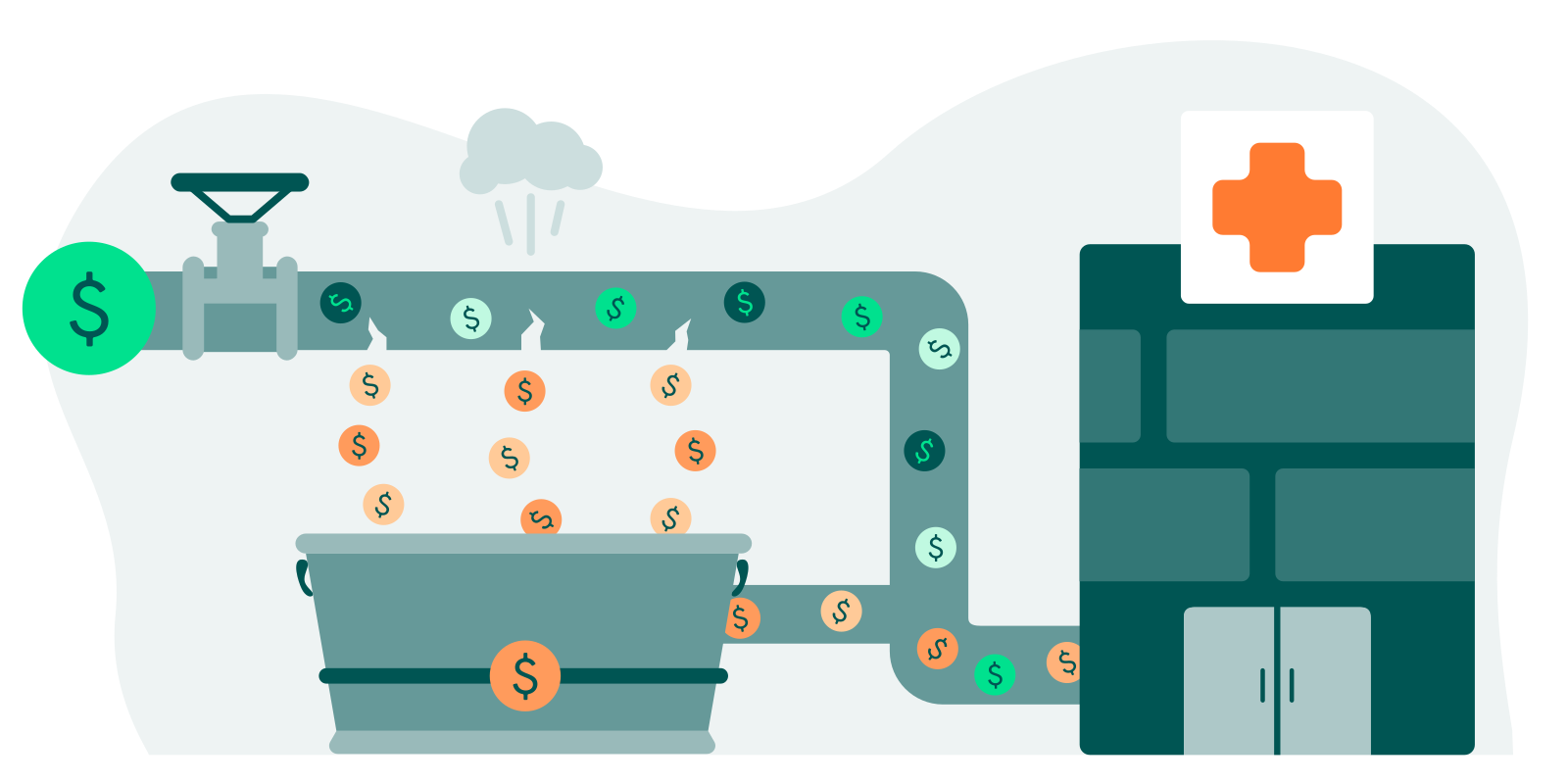
Missed charges, coding errors and CDM drift quietly drain revenue before your claims ever go out. This playbook shows revenue integrity leaders how to find the leakage, defend compliance and capture more of the revenue they’ve already earned, before the bill leaves the building.
What’s Inside
A short, practical playbook you can hand to your finance, HIM and revenue integrity teams. Inside, you’ll get:
-
The three signals that reveal a revenue integrity gap hiding inside your denials and clean claim rate
-
Five connected plays to review 100% of bills pre-bill, keep your CDM compliant and quantify net revenue impact against your real payer contracts
-
Benchmark proof points, including what up to $5M a year in recovered charges can look like at a $500M health system
-
A repeatable framework to turn one-time cleanups into an ongoing program that keeps earned revenue from slipping out the middle of the cycle
The Revenue Integrity Playbook
Complete the form to get instant access.
The Revenue Integrity Playbook
Complete the form to get instant access.
Frequently Asked Questions
What is revenue integrity in healthcare?
Revenue integrity is the process of making sure a hospital gets paid accurately for the care it provides while staying compliant with coding and billing rules. It sits in the middle of the revenue cycle, between patient access and claims, and protects both revenue and compliance.
What causes revenue leakage in the middle of the revenue cycle?
Most middle-of-cycle leakage comes from missed charges, overcharges, incorrect charges and coding errors, often compounded by a chargemaster that has drifted out of date. Because manual audits only review a fraction of accounts, these gaps frequently go unnoticed until they surface as denials or underpayments.
How much revenue do charge capture errors cost hospitals?
According to HFMA, roughly 1% of net patient revenue is lost to charge capture errors. For a hospital with $500 million in annual net revenue, that can mean up to $5 million a year. HFMA also attributes about 25% of rejected claims to charge capture errors.
How is revenue integrity different from denials management?
Denials management works on the back end, after a claim has been rejected. Revenue integrity works earlier, before the bill goes out, to prevent the charge and coding errors that cause many denials in the first place. Strong revenue integrity can help reduce denials, improve clean claim rate and cut costly rework.
Who’s this playbook for?
Healthcare finance and revenue cycle leaders: CFOs, VPs and Directors of Revenue Integrity and Revenue Cycle, plus HIM and compliance leaders who are responsible for capturing earned revenue and defending compliance.
How long is it and what does it cost?
It’s a concise, board-ready playbook and it’s free. Fill out the form and the playbook is yours instantly.