

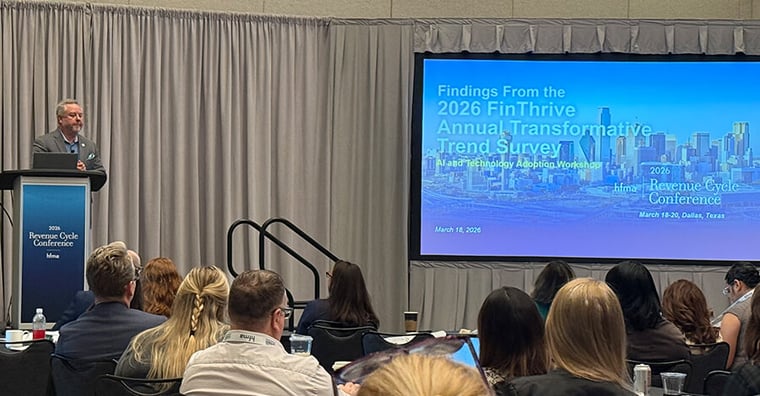
Last week in Arlington, Texas, we had the opportunity to attend the HFMA Revenue Cycle Conference (RCC) 2026, and it was one of those conferences that feels less like an industry update and more like a collective reset. With healthcare organizations facing persistent labor shortages, rising payer friction, tighter margins and accelerating artificial intelligence (AI) innovation, RCC provided a timely and grounded look at how revenue cycle leaders are navigating what comes next.
What stood out immediately was the practical focus of the discussions. We didn’t hear endless speculation about theoretical futures. Instead, leaders focused intensely on what works right now, what fails and what organizations must stop doing to achieve real value from automation. We observed a distinct shift in mindset across the industry, moving away from simple curiosity and toward rigorous, disciplined execution.
This post outlines our core takeaways from the event, detailing the trends and strategies we believe will shape the future of revenue cycle management over the next several years.
Shifting From AI Curiosity to Operational Reality
The preconference AI and Technology Adoption Workshop set the tone early. Rather than asking if AI belongs in revenue cycle, the discussion focused squarely on how to implement it responsibly and at scale. One of the most consistent themes we noticed throughout the week was that health systems can no longer “staff their way out” of revenue cycle challenges. Volumes are rising, FTEs are flat and the administrative burden placed on clinical and coding teams continues to grow.
Speakers emphasized that technology adoption only succeeds when paired with strong governance, workflow redesign and transparency. This was especially clear in the autonomous coding case study, which showed how GenAI powered coding augmentation—embedded directly into the EHR with a human in the loop—can stabilize operations without increasing headcount.
What resonated most was how leaders reframed the modern workforce. Technology didn’t replace coders in these successful case studies. Instead, organizations repositioned these professionals into higher-value roles focused on validation, audits, denials and revenue integrity. That message came up repeatedly across sessions: technology doesn’t replace people—it changes where their time matters most.
Transformative Trends Shaping Revenue Cycle Strategy
The panel focused on 2026 Transformative Trends in revenue cycle provided crucial context around why so many organizations are accelerating investment now. Patient financial experience (PFX) emerged as a top strategic priority—often ranking above cost reduction or incremental revenue improvement. Leaders recognize that a confusing or frustrating billing process damages patient retention and brand loyalty.
At the same time, experts called out claim denials as increasingly destructive to the bottom line. Denials carry significantly higher downstream write-off impacts than they did just five years ago. This reality reinforces the urgent need for proactive denial prevention rather than relying on reactive recovery efforts. Catching errors before a claim leaves the building saves thousands of hours in rework.
We noted how consistently speakers warned against the dangers of automating broken processes. Multiple leaders referenced the "workaround mountain" or the "Frankencycle" that emerges when organizations hastily layer new technology over fragmented workflows. The core message was undeniable: process integrity must always come before automation. AI simply amplifies whatever operating model already exists. If the foundation relies on inefficient workarounds, automation will only perform those inefficient steps faster.
Leadership, Trust and the Human Side of AI
Day two featured several keynotes focused on leadership, reminding attendees that revenue cycle transformation requires immense change management. Leaders from large health systems spoke candidly about workforce anxiety, emphasized the importance of transparency and underscored the need to frame new technology in ways that build trust with frontline staff.
One particular insight stood out to us as a highly effective management strategy. Leaders suggested asking teams two simple questions: What do you love about your job? What do you loathe about your job? The answers almost always point directly to where automation can help eliminate tedious tasks, while also highlighting where human judgment and empathy should remain central.
The conference also featured thoughtful discussions around payer dynamics, including the rise of automation on both sides of the equation—what many now call the emerging “battle of the bots.” We observed that as payer algorithms increasingly deny claims automatically, providers are responding with automated appeals. The takeaway wasn’t fear, but realism: automation is quickly becoming table stakes, and organizations that don’t invest in these capabilities risk falling further behind.
Securing Practical Wins Across the Revenue Cycle
Beyond the broader discussions of AI, RCC delivered exceptionally strong, practical content across the entire revenue cycle.
Addressing Compliance and Workflow Gaps
We attended highly informative sessions on compliance risks tied to referring provider orders. These presentations showed how even the smallest gaps in governance can lead to denied claims and unwanted regulatory exposure. Organizations must tighten these specific workflows to protect their revenue.
Enhancing Front-End Standardization
Front-end workflow case studies demonstrated the immense value of getting things right at the start of the patient journey. Presenters showed how strict standardization, excellent data hygiene and clear key performance indicators dramatically reduce preventable denials. Gathering accurate demographic and insurance data upfront eliminates countless headaches on the back end.
Deploying Clinical AI Effectively
We also observed clinical AI examples that demonstrated meaningful, measurable revenue lift. The secret to this success involves deploying the technology at exactly the right point in the workflow. Organizations see the best results when intelligent tools are applied before generating the final bill, rather than using them to clean up mistakes after the fact.
Across all these varied sessions, we observed one consistent truth. The health systems seeing the best financial results aren’t chasing shiny new tools just for the sake of innovation. Instead, they focus relentlessly on operational discipline, accurate performance measurement and strict cross-functional ownership.
Looking Ahead to the Future of Revenue Cycle
The closing keynote brought the entire week full circle, as the speaker zoomed out to examine the broader macroeconomic forces shaping the healthcare industry over the next 10 years. These forces range from shifting patient demographics and prolonged economic uncertainty to the rapid evolution of agentic AI systems capable of executing complex, multi-step tasks autonomously.
The challenge for healthcare leaders was clear. Incremental optimization will not define the successful health system of the future. True success demands a willingness to completely rethink how departments organize work, how teams make critical decisions and where human judgment delivers the greatest value to the patient journey.
Leaving Arlington, we came away with a sense of cautious optimism. Revenue cycle is under more pressure than ever—but the path forward is becoming clearer. The organizations that succeed won’t be the ones that adopt the most technology. They’ll be the ones that combine strong process foundations, disciplined governance and empowered teams to turn innovation into execution.
HFMA RCC 2026 didn’t just showcase where revenue cycle is going—it showed what it takes to get there. We look forward to partnering with healthcare organizations to turn these vital industry insights into measurable operational success.